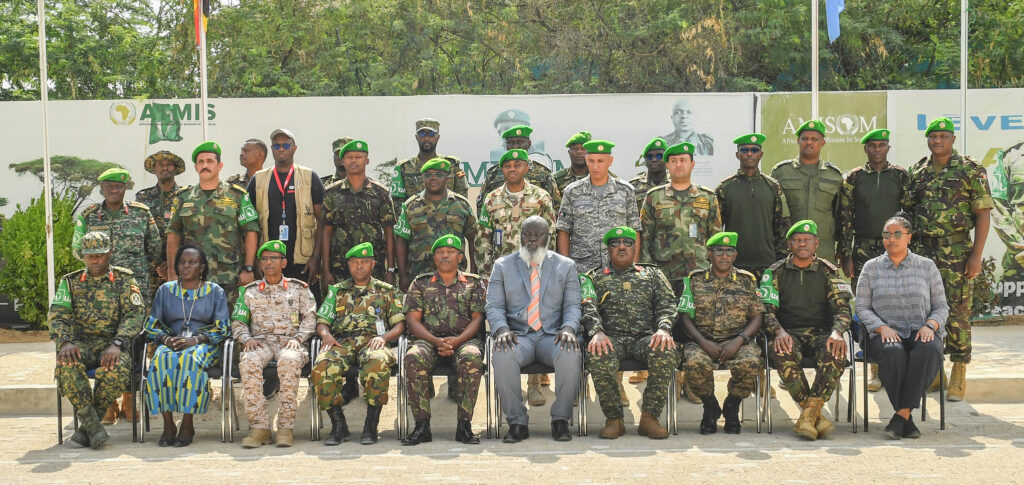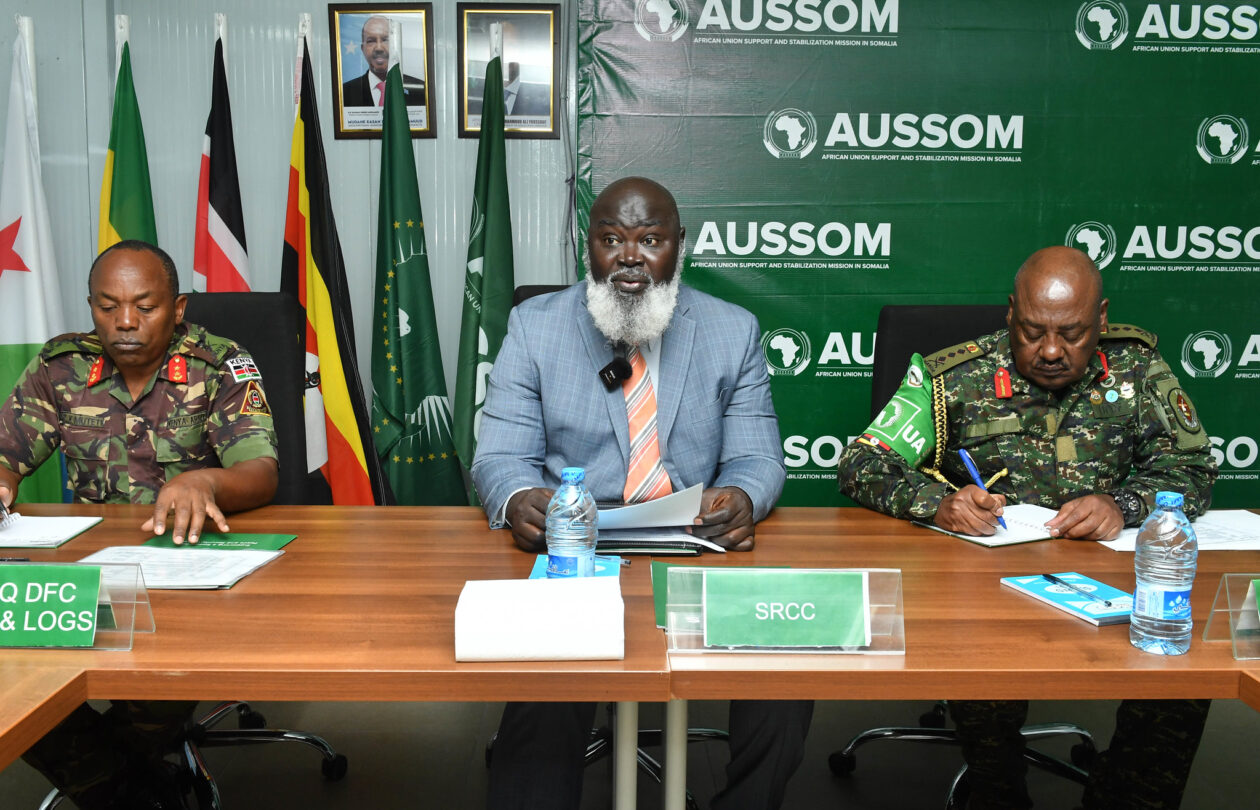
Mogadishu – The Special Representative of the Chairperson of the African Union Commission for Somalia (SRCC) and Head of the African Union Support and Stabilisation Mission in Somalia (AUSSOM), Ambassador El Hadji Ibrahima Diene, on Monday opened a two-day meeting of the AUSSOM Force Commander and Sector Commanders convened to review the Mission’s operational performance and assess progress.
The meeting, held at AUSSOM Force Headquarters in Mogadishu, has brought together Sector Commanders, senior military staff officers, and representatives from the civilian component to take stock of achievements in the Mission’s five sectors, share operational challenges, and identify measures to strengthen coordination, teamwork, and civil–military cooperation (CIMIC). The meeting will also focus on aligning sector-level priorities with the next phase of operations under the AUSSOM mandate.
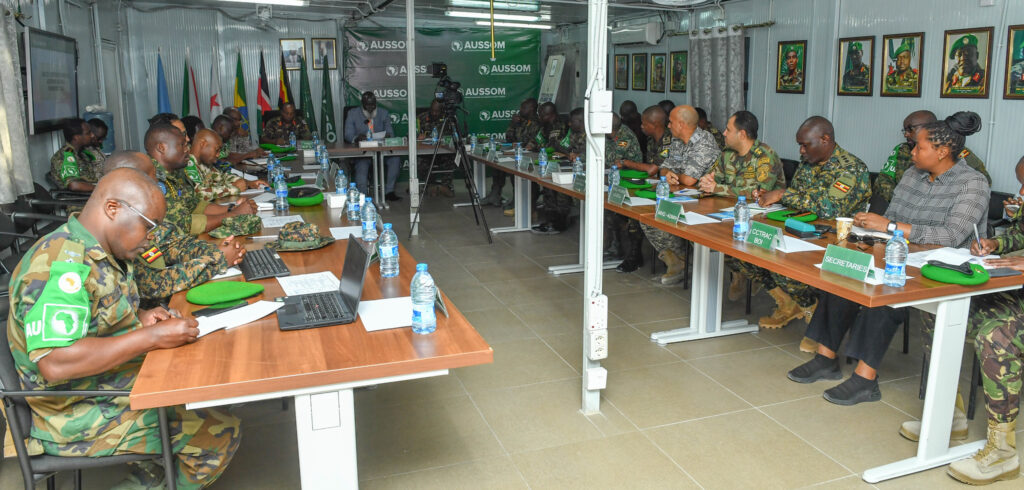
Starting the meeting, AUSSOM Force Commander Lt. Gen. Sam Kavuma highlighted the significance of the conference as the Mission approaches the end of its first year of operations. He noted that AUSSOM, which officially commenced on 1 January 2025, is now concluding its initial mandate period, making the review timely and necessary.
Lt. Gen. Kavuma stressed that the ongoing process to renew the Mission’s mandate must be informed by a clear assessment of progress, challenges, and readiness, but highlighted resource challenges as key issues affecting operations and troop morale.
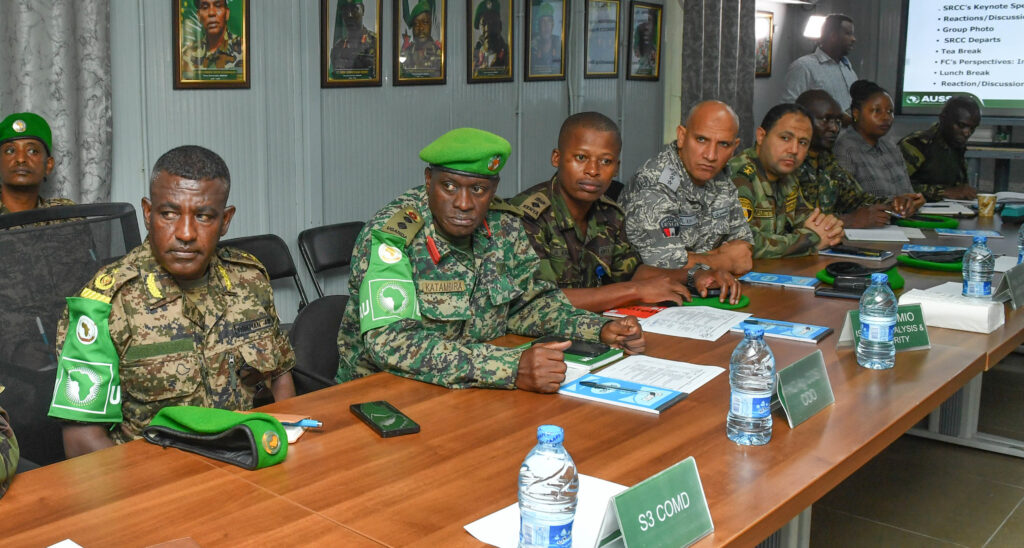
On January 1, 2025, AUSSOM succeeded the African Union Transition Mission in Somalia (ATMIS) after authorisation by the United Nations Security Council in late 2024. This decision marked a new phase in the AU’s support to Somalia’s peace and security agenda. As the Mission prepares to commence its second year in January 2026, senior military leadership is considering ways to sustain operations, protect the hard-won gains across Somalia, and support the gradual transfer of security responsibilities to Somali forces.
In his keynote address, Ambassador Diene emphasised the crucial role of collective review and forward planning as Somalia’s security landscape remains dynamic while the Mission operates under significant financial pressures. He said the meeting provided an opportunity to assess mandate implementation in line with the AUSSOM Concept of Operations (CONOPS), examine the evolving threat environment, and agree on delivery of best results amid anticipated reductions in resources and support.
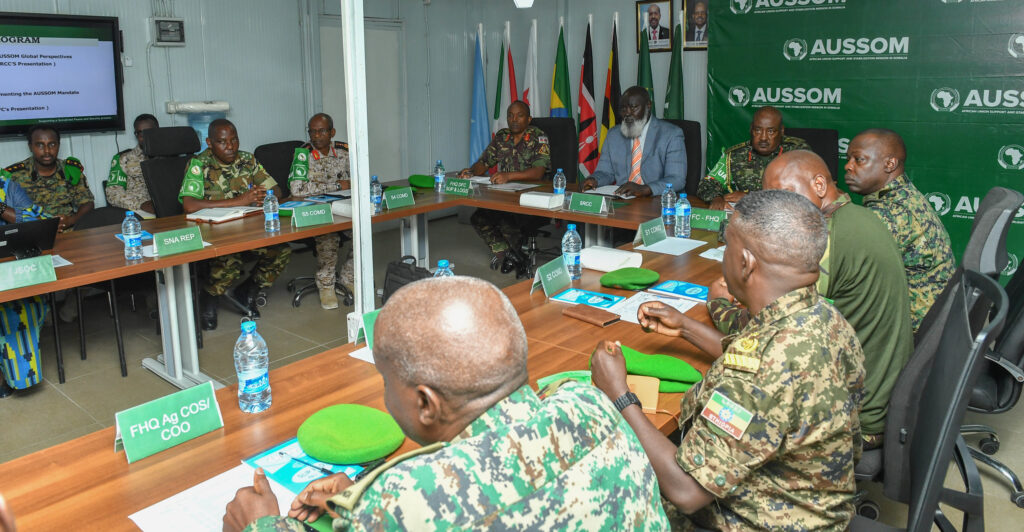
“Our success depends on coherence: coherence of strategy, unity of effort across Sectors, strong partnership with the Federal Government of Somalia (FGS), unified messaging in the face of Al-Shabaab propaganda, and disciplined prioritisation in a resource‑constrained environment,”Ambassador Diene said, emphasising that effective coordination, consistent strategy, and shared purpose remain essential as AUSSOM supports Somali-led peace and stabilisation efforts.
The SRCC stressed that joint operations between AUSSOM and the Somali Security Forces (SSF) must remain central to the Mission’s approach to a successful transition to SSF.
Ambassador Diene said. “It also means intensifying our collaborative efforts to degrade Al-Shabaab’s capabilities. Every operation should be designed not just to clear territory, but to hold it and create the space for governance and basic social services to follow—the essence of the Somali-led stabilization initiatives.”
The SRCC also highlighted the link between security and politics, reminding commanders that military operations are intended to create space for governance, reconciliation, and service delivery, and urged the sector leadership to collaborate with civil authorities and local communities in consolidating gains and support to Somali-led stabilisation initiatives.