



Mubarak – In the recently liberated town of Mubarak, humanitarian aid is in full swing. A makeshift clinic is busy as residents receive long-awaited medical care, while rows of food rations are prepared for distribution. Organised crowds have gathered waiting to receive essential food and medical supplies.
Located approximately 51 kilometres southwest of Mogadishu in Qoriyoley district, Mubarak’s strategic position in Lower Shabelle region once made it a preferred hub for Al-Shabaab insurgents to disrupt supply lines and threaten the capital. That changed recently following a joint liberation operation by the African Union Support and Stabilisation Mission in Somalia (AUSSOM) Ugandan troops, the Somali National Armed Forces (SNAF) and partners.
For residents like Salah Ali Hassan, the shift is life changing.
“We are pleased with the assistance we have received from Ugandan troops. We now have peace and pray for its continuance. We request AUSSOM and partners to continue standing with us,” Hassan said.
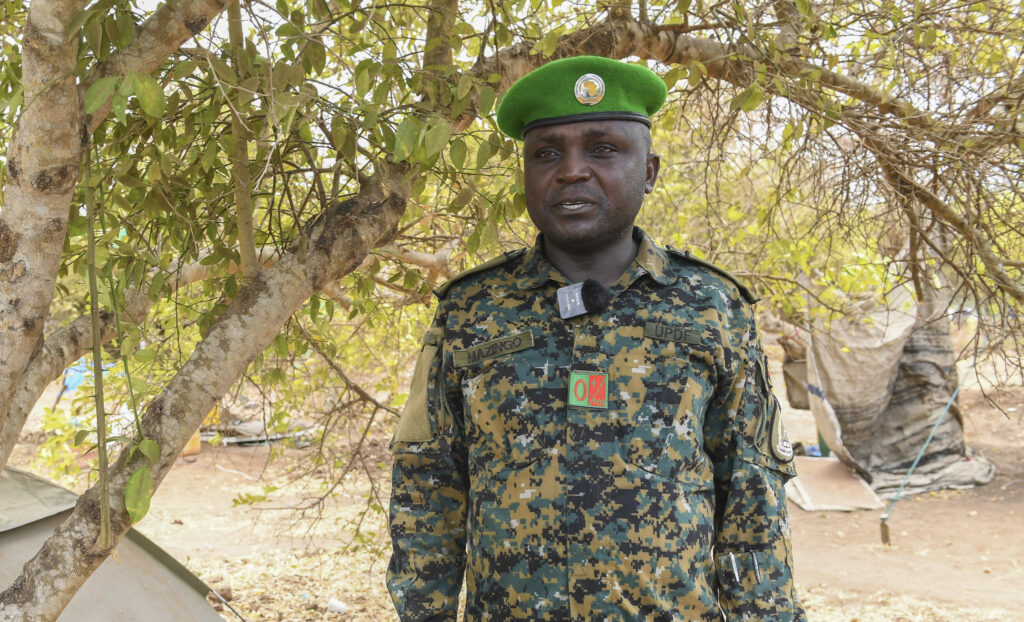
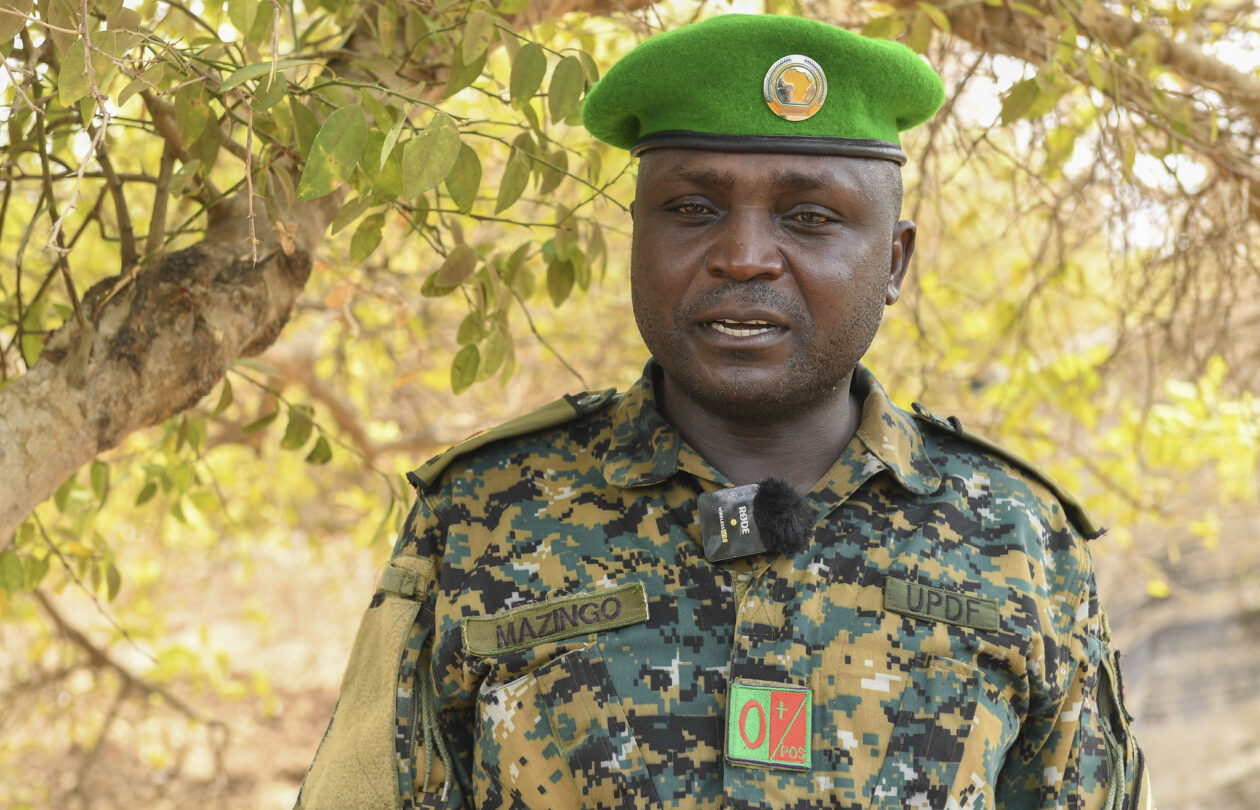
At the heart of this donation is Major Jackson Mazingo. His commitment to the local population is remarkable, even in the volatile frontline areas like Mubarak. Armed with his rifle for protection, he proves that even in conflict-affected areas, humanitarian support remains inevitable.
As the Civil Military Cooperation (CIMIC) Officer for AUSSOM Sector 1, Maj. Mazingo manages aid distribution for over 300 households. However, his most difficult task is clearing the fog of suspicion in the region.
“Many locals who returned home after the liberation didn’t understand the role of AUSSOM,” he explained. “Some thought we were against their religion or their norms. My role is to coordinate with elders and religious leaders to ensure they know we are here for one purpose: bringing a long-lasting solution of peace so that they can develop themselves.”
This coordination is vital for “winning hearts and minds”, a military doctrine that prioritises community trust over territorial gains. By acting as a liaison between the military, local leaders, and NGOs, Maj. Mazingo ensures that aid reaches the vulnerable members of the society.
From basic food items such as rice, wheat flour, cooking oil, sugar and bedding to life-saving medicine, Maj. Mazingo ensures these donations reach vulnerable populations. To bolster this support, Ugandan troops also provide direct healthcare through local medical camps, treating residents for common illnesses on-site.
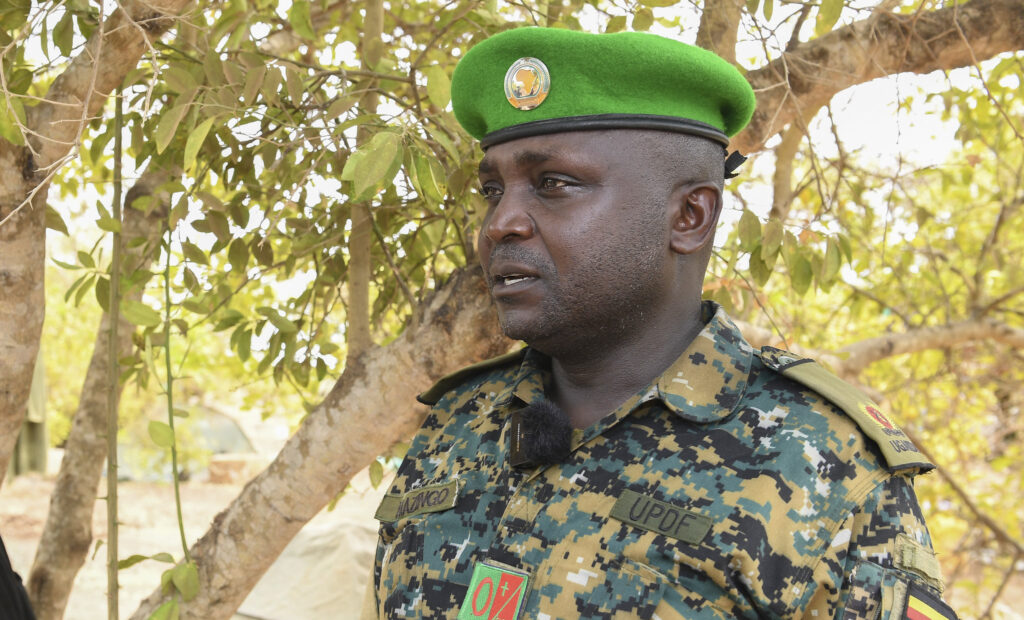
The impact of CIMIC operations is becoming visible in the return of normalcy. Following the displacement caused by the Al-Shabaab insurgents, residents are beginning to return to their homes in Mubarak, Darusalaam and the surrounding areas.
“They have started doing business again; they are grazing their animals,” Maj. Mazingo said.
This return of commerce and daily life is a direct result of the confidence built through constant dialogue. Maj. Mazingo pointed to the warm reception of recent relief efforts as a barometer of their success: “They were even clapping; we are in a good relationship.”
Despite the gains, the mission remains a gruelling test of endurance. Maj. Mazingo described a theatre defined by harsh climatic conditions, infrastructure challenges, and a persistent lingering threat.
Beyond the tactical hurdles is the personal toll of service. “Our families miss us, but we can’t lose focus. The Somali people are our brothers and sisters, and we must continue the mandate,” he said.
Maj. Mazingo emphasised that AUSSOM does not operate in a vacuum. His work is deeply integrated with SNAF and other security partners. By conducting joint operations, AUSSOM has helped bolster the confidence and capability of the Somali Security Forces (SSF).
Ultimately, Maj. Mazingo saw his role as a precursor to civilian governance, believing that once security is stabilised through partnerships, development can set off.