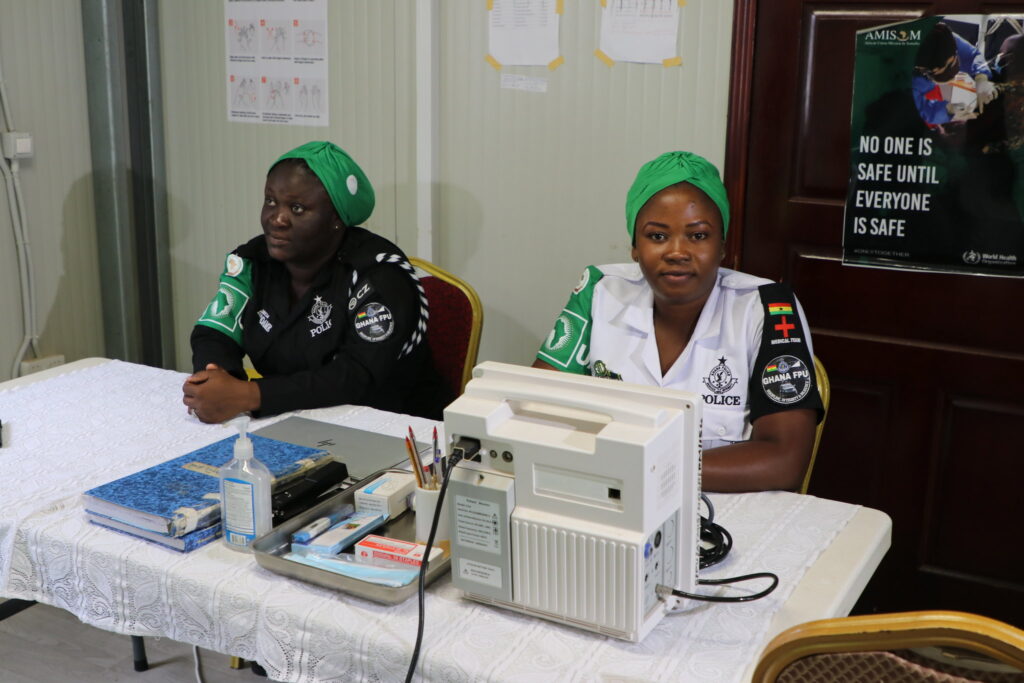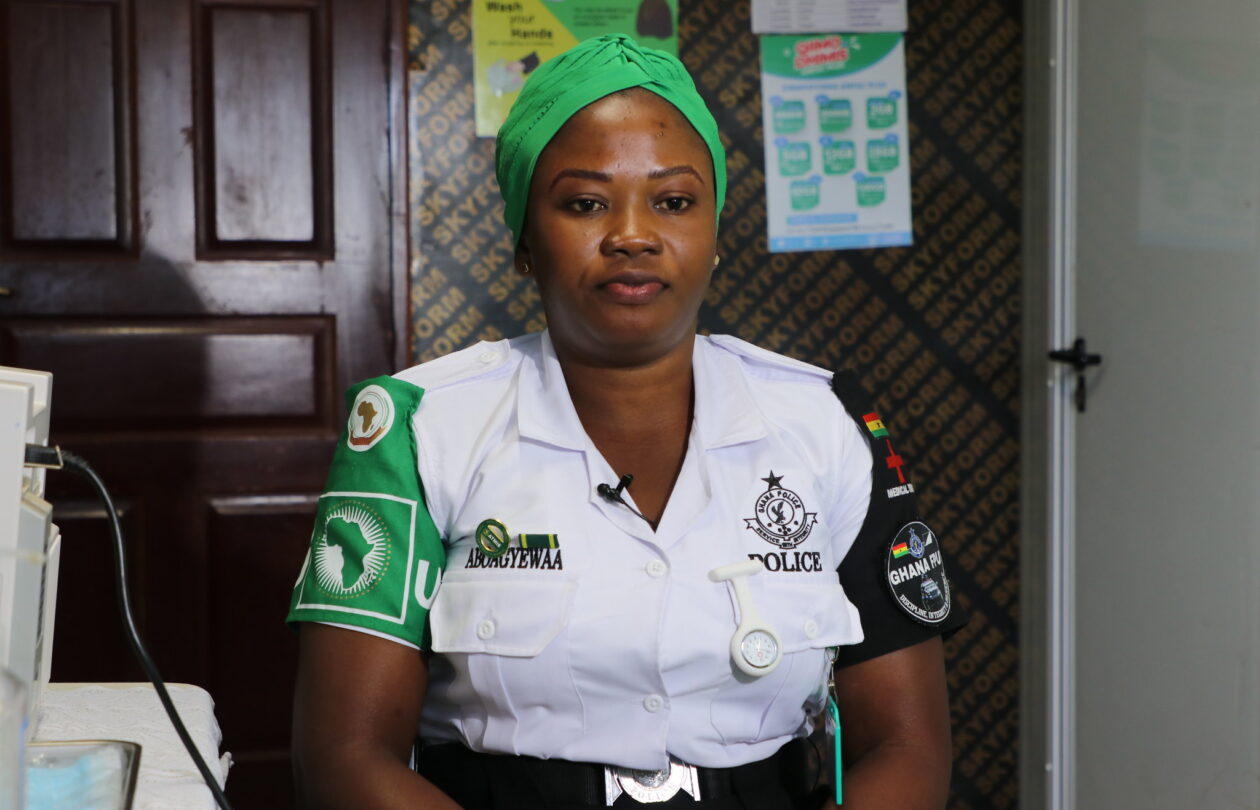
Baidoa – Lance Corporal Abigail Mireku Aboagyewaa is a Ghanian police officer serving with the African Union Support and Stabilisation Mission in Somalia (AUSSOM). As contingent nurse, her work is critical. In an environment shaped by both fragility and resilience, she serves as a caregiver, a first responder and vital link with communities.
Stationed at AUSSOM Level I hospital in Somalia’s Baidoa City, South West State, Lance Corporal Aboagyewaa provides critical medical care to her uniformed colleagues and civilians alike.
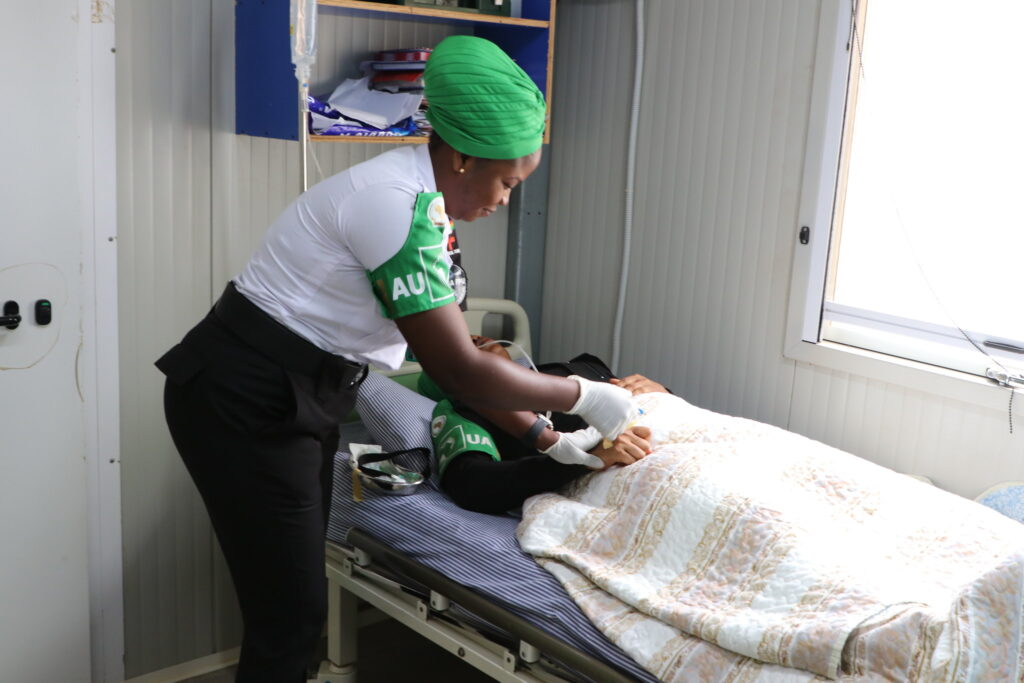
For six years, she worked as a civilian nurse at the Ghana Police Hospital. By observing her colleagues balance clinical care with law enforcement duties, she found her inspiration.
“Seeing fellow nurses working in full uniform as a police officer and a nurse really inspired me to push myself into the service. They were the ones saving lives and then maintaining law and order in the community as well,” Lance Corporal Aboagyewaa said.
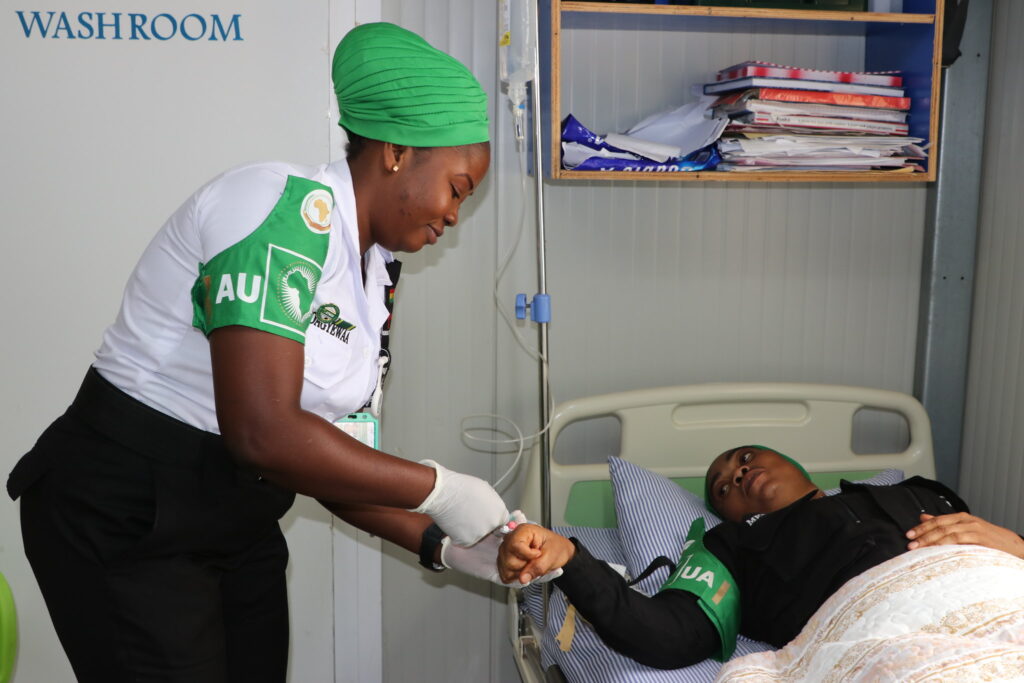
Her day begins early, often before the first light fully breaks over Baidoa. By the time her colleagues report for duty, she has already cleaned, disinfected and prepared the clinic, making it ready to offer a service.
When the clinic finally slows in the late afternoon, she returns to her quarters, but only briefly. Emergencies come at any hour, and night shifts are part of the routine here.
Lance Corporal Aboagyewaa’s contribution extends beyond the clinic walls. She plays a key role in supporting the broader mission, providing medical care not only to her fellow officers but also the local Somali Police Force (SFP), civilians, military personnel and United Nations staff. This is a responsibility she carries with pride.
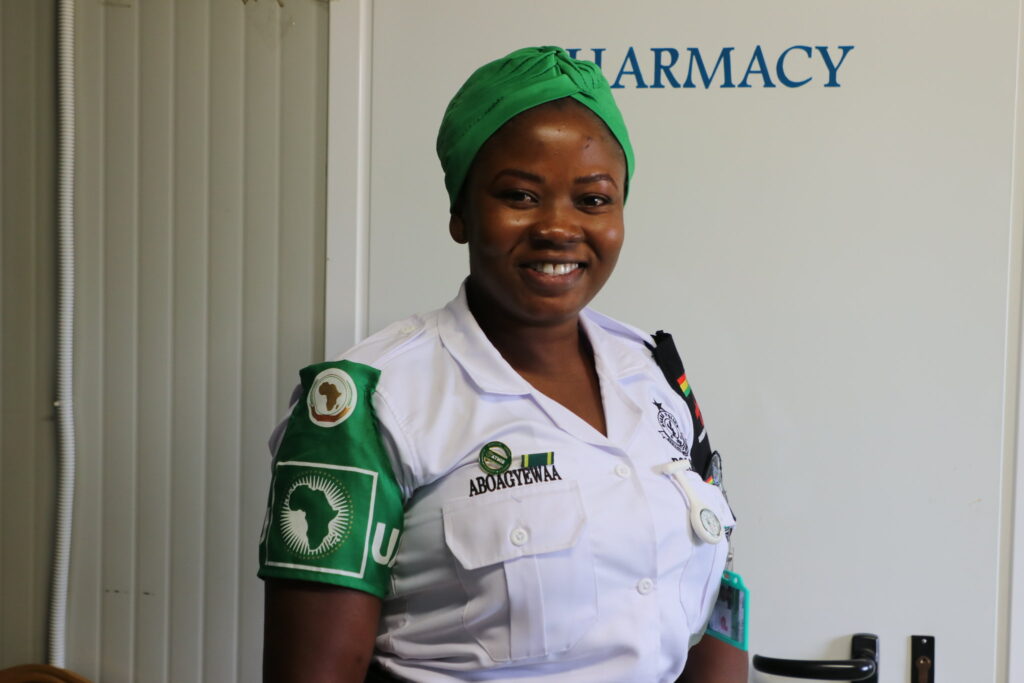
“I contribute to the AUSSOM police mandate by providing medical care to our personnel, the local police force and the community,” she explained.
Collaboration is central to that effort. When cases require advanced care, Lance Corporal Aboagyewaa helps coordinate transfers to a higher-level facility run by the Ethiopian contingent serving under AUSSOM. She often accompanies patients in the ambulance, ensuring continuity of care.
Behind the scenes, coordination with United Nations Support Office in Somalia (UNSOS) logistics teams ensures the clinic has clean water, electricity and safe disposal for medical waste – small details that make a critical difference.
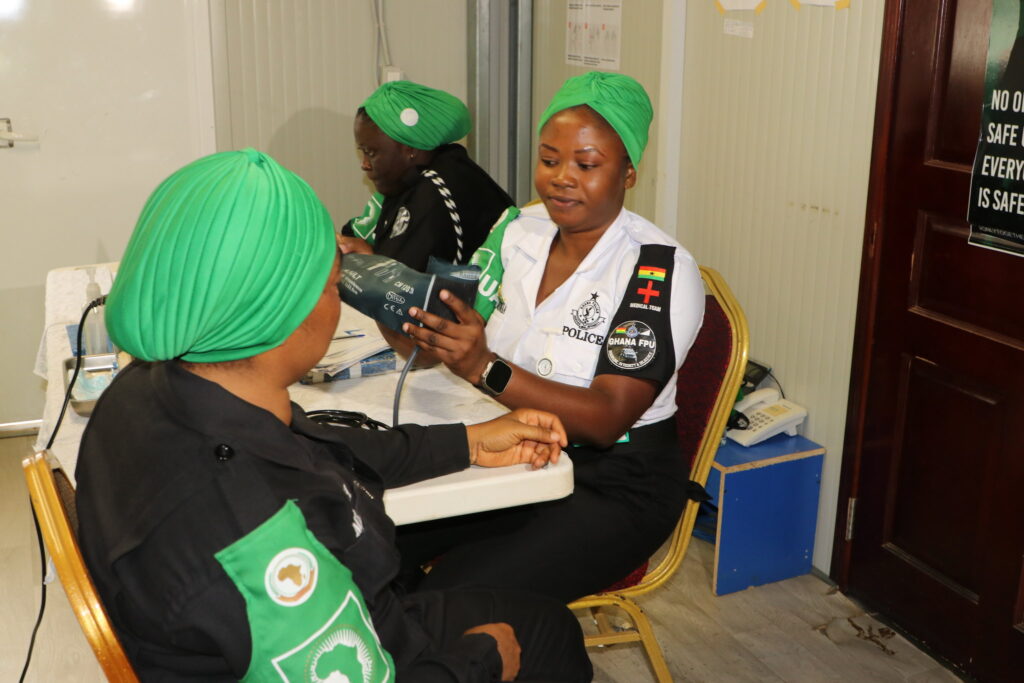
“UNSOS helps us to dispose expired drugs, supply us with electricity, our water. They also fuel our ambulance for us to be able to move patients here and there,” Lance Corporal Aboagyewaa adds.
Her impact is perhaps most visible in the trust she helps build. Local police officers bring family members for treatment. Workers maintaining the compound come in for care. “We treat them, we run labs, we give medications,” she said. “I feel this has really impacted their lives.”
Despite the challenges, Lance Corporal Aboagyewaa’s experience over the past two years she has served in Somalia has been deeply rewarding. She said working alongside people from different countries has broadened her perspective.
“I’ve learned to adapt to different cultures, languages, even foods and dances,” she said with a smile. “You learn to live and share with others, and to take responsibility for your own safety.”
For Lance Corporal Aboagyewaa, the mission is also personal and her message to the next generation of women who may follow a similar path is clear: “If I’ve been able to do this, they too can.”
She speaks of nursing not just as a profession, but as a calling rooted in human connection. “Saving lives is interesting,” Lance Corporal Aboagyewaa said. “At the end of the day, people appreciate what you do. You put smiles on their faces.”